In the United States the keeping of vital records varies from state to state.
- In general they are most consistently kept by the county, but after a certain date (which varies from state to state) the records are also kept by the state government.
- Sometimes records will be kept by the city government, usually that is the case only when a large city.
- In New England states vital records were (and still are) kept by the town rather than the county. New York also has some town and village vital records.
- Availablity and freedom of access to these records varies from state to state, county to county and city to city.
- We want a birth, marriage and death record for each of our ancestors -- but in fact, we will have all three for very few and many will have none of the three. In that case we look for substitutes.
Take these more comprehensive lessons in locating and using Vital Records:
- FamilySearch Wiki: U.S. Vital Records and U.S. Civil Records. Note at the bottom of each page is a listing of links to information about each state. This is a quick and easy way to learn about the vital records in the state you are researching.
- Use the Ancestry Redbook for state by state information
- Watch this educational video on U.S. Vital Records
Birth Records
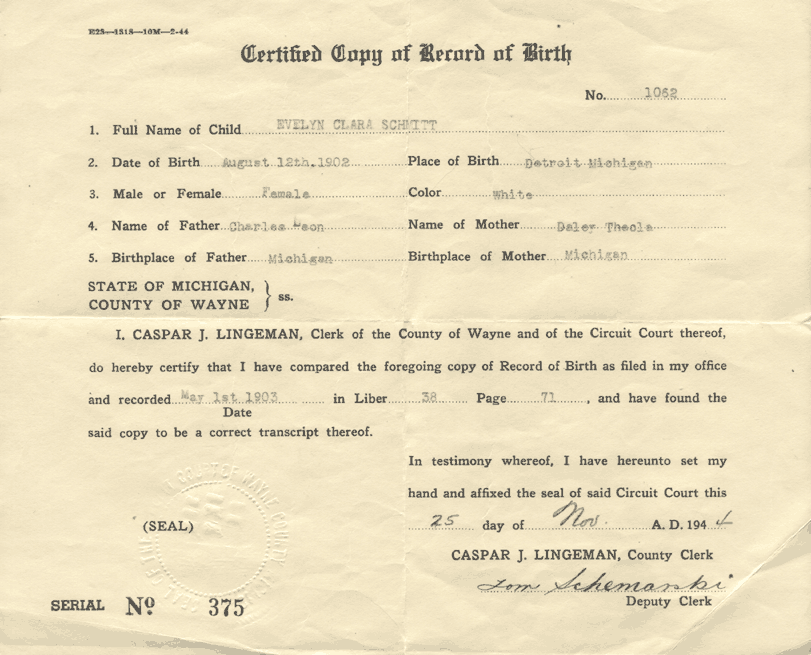
Birth records were usually the last of the three to be consistently recorded. Further, due to concerns about identity theft they are the more restricted of the records. When available, a birth certificate provides evidence of the parentage, date and place of birth and a variety of other information, depending on the requirements of the jurisdiction in charge. See: Family Search Wiki U.S. Birth Records for more inforamation.
Examples:
Marriage Records
In addition to the actual marriage record, you may also find records associated with a marriage -- for example, bonds given, banns read or licenses applied for. For more information, see Family Search Wiki: U.S. Marriage Records. See also Gretna Greens in the United States.
Marriage records serve a number of legal purposes. In addition to legitimizing the birth of children, they carried legal weight as to property rights, as well as protection against bigamy. Thus many states recorded marriages earlier than birth or death records. Information on marriage records may include only the names of the bride and groom and name and position of person who married them. However they usually contain ages and may contain substantially more information.
Common Law marriages -- marriages without licenses and not recorded -- were not illegal in most states and they were quite common in some states.
- Children born of common law marriages were legitimate.
- Property rights were protected by law.
- Responsibilities were upheld in the courts.
- If the parties wanted to disolve the marriage they were required divorce (or annul the marriage).
Elements of a common law marriage included:
- Agree to live together as man and wife
- Present to others as living as man and wife
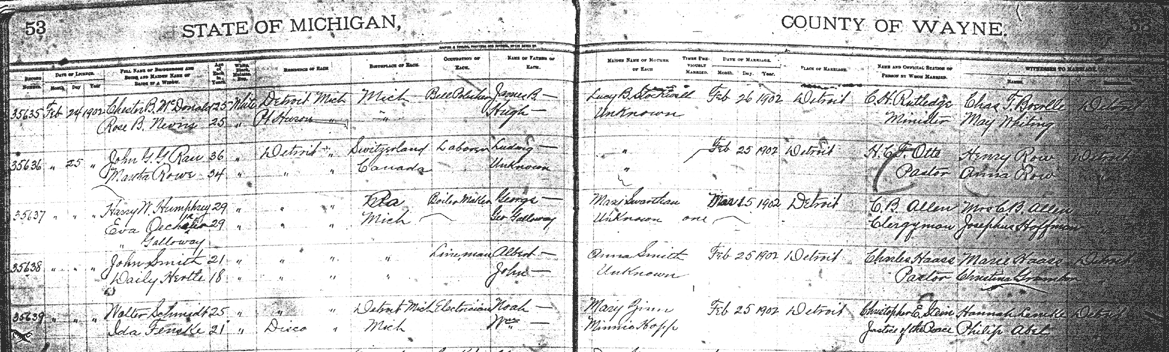
Examples of some marriage records
Death Records
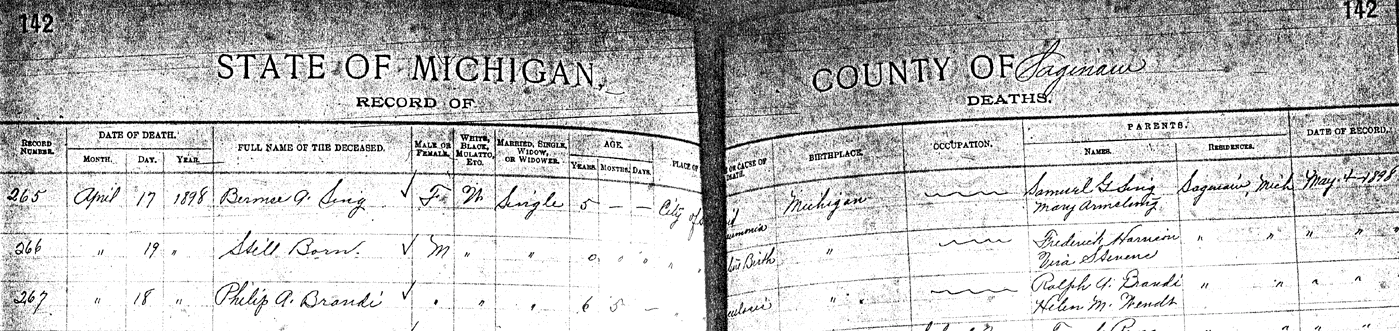
Death records will give us the date of death, usually also the place, cause and sometimes more information about the person. See the Family Search Wiki: U.S. Death Records
Divorce Records
- Divorce records are public records and access should not be restricted in the United States, although I have encountered court personnel who considered them to be "private."
- Some early divorces were granted by the legislature, but for the better part of our history have been settled through the courts. You will need to find out which court had jurisdiction in the state you are researching.
- Legislative Divorces have often been extracted and published separately. If not, they will be found in the private acts of the legislature and sometimes announced in a newspaper.
- When ordering divorce records ask for two files: 1) the decree and 2) the case file or petition.
- Use the Family Search Wiki: U.S. Divorce Records. for more information. This page does not offer the handy links to divorce information for each state; check the state page under the topic "vital records" to obtain information specific to a state.
- Divorce laws vary from state to state and within a state they varied from year to year, depending on how frequently and when the legislature passed a law concerning divorce.
- If laws in one state precluded a divorce, the couple -- or only one of the parties -- may have obtained a divorce in a more lenient state. The divorce then would not be recorded where the parties lived but in the state where the divorce was obtained.
- Because laws specified the only causes for which a divorce might be granted, we must wonder how much of the reasons given were truth and how much was an agreed upon falsehood acceptable to both parties in order to obtain the desired result. Collusion was prohibited, but not uncommon.
- Separation or divorce? Not everyone who parted divorced. Don't assume.
- Common law marriage? There is no such thing as common law divorce. In most states common law marriages were legal until at least the late 19th century; in some states it is still legal. Such marriages could be ended only by legal measures. The couple could not divorce as easily as they married.
- Not every "divorce" was legal. Some people separated and if one or both of the parties left the area it would have been possible for that party to remarry with the bigamous marriage never discovered or challenged.
Locating and Obtaining vital records:
Check FamilySearch.org first;
- Do they have birth, marriage or death records indexed and/or online for the jurisdiction you are searching?
- The records are kept at the state office designated to retain jurisdictin over them and at the county courthousees and in some cities. In most cases the earlier records will be only at the courthouse. Many vital records have been filmed by the Family History Library. Check the catalog to see what records have been filmed for the area you are researching.
The most useful site is probably the one at VitalRec.com. -- it is useful because it offers a quick and easy (but more costly) way to order records, but it also gives a link to the official state site, where you can sometimes find indexes or even online records, as well as information on how to order directly from the counties and other helpful links. You must scroll down to get all the information.
Some helpful books you can consult: The County Courthouse Book is especially useful if you plan to contact or visit the courthouse to obtain your records.
The International Vital Records Handbook is helpful if you need to order a record from a state or international government.
Substitutes for
vital records
More links at :
US Vital Records @ Cyndislist
|



.jpg)